A practical guide to understanding ratchet pruning shears, their cutting mechanism, advantages, limitations, and the features that matter when choosing a garden pruner.
Pruning is an important part of maintaining healthy, attractive and manageable plants. Whether you grow flowers, herbs, shrubs, fruit plants or ornamental trees, the right cutting tool can make routine garden maintenance easier.
However, not all pruning shears work in the same way. While conventional pruning shears use a direct hand-squeezing action, a ratchet pruner uses a step-by-step cutting mechanism designed to help the user cut through a stem or branch over multiple squeezes rather than relying on one continuous squeeze.
This makes ratchet pruning shears an interesting option for gardeners who want a more controlled cutting action, particularly when working with stems and branches that require more effort than smaller, softer growth.
But what exactly is a ratchet pruner? How does its mechanism work? Is it better than regular pruning shears? What does a 3-stage ratchet mechanism mean? And what should you check before buying one?
In this guide, Fresh Trove explains the essential details to help you understand ratchet pruning shears and choose a tool that suits your gardening requirements.
Quick Answer: What Is a Ratchet Pruner?
A ratchet pruner is a hand-operated gardening tool that uses a ratcheting mechanism to cut plant stems and branches in successive stages. Instead of completing the cut with one continuous squeezing movement, the mechanism allows the user to apply pressure through multiple squeezes.
A ratchet pruner may be worth considering when:
- You want a step-by-step cutting action.
- You prefer to apply cutting pressure in stages.
- You regularly prune shrubs, plants, flowers and suitable branches.
- You want a dedicated hand tool for routine garden maintenance.
The actual cutting ability depends on the blade, mechanism, tool construction, branch condition and manufacturer’s stated cutting capacity. A ratchet mechanism does not mean that every pruner can cut branches of any thickness.
1. What Is a Ratchet Pruner?
A ratchet pruner, also known as ratchet pruning shears or a ratchet garden pruner, is a handheld cutting tool used for pruning plants.
Its main distinguishing feature is the ratchet mechanism. This mechanism allows the cutting action to progress through a sequence of stages.
In a conventional hand pruner, the handles are squeezed together to complete the cut. In a ratchet pruner, the cutting action can advance incrementally. The user squeezes the handles, the mechanism holds the progress, and another squeeze advances the blade further.
This step-by-step action is what makes a ratchet pruner different from many ordinary garden pruning shears.
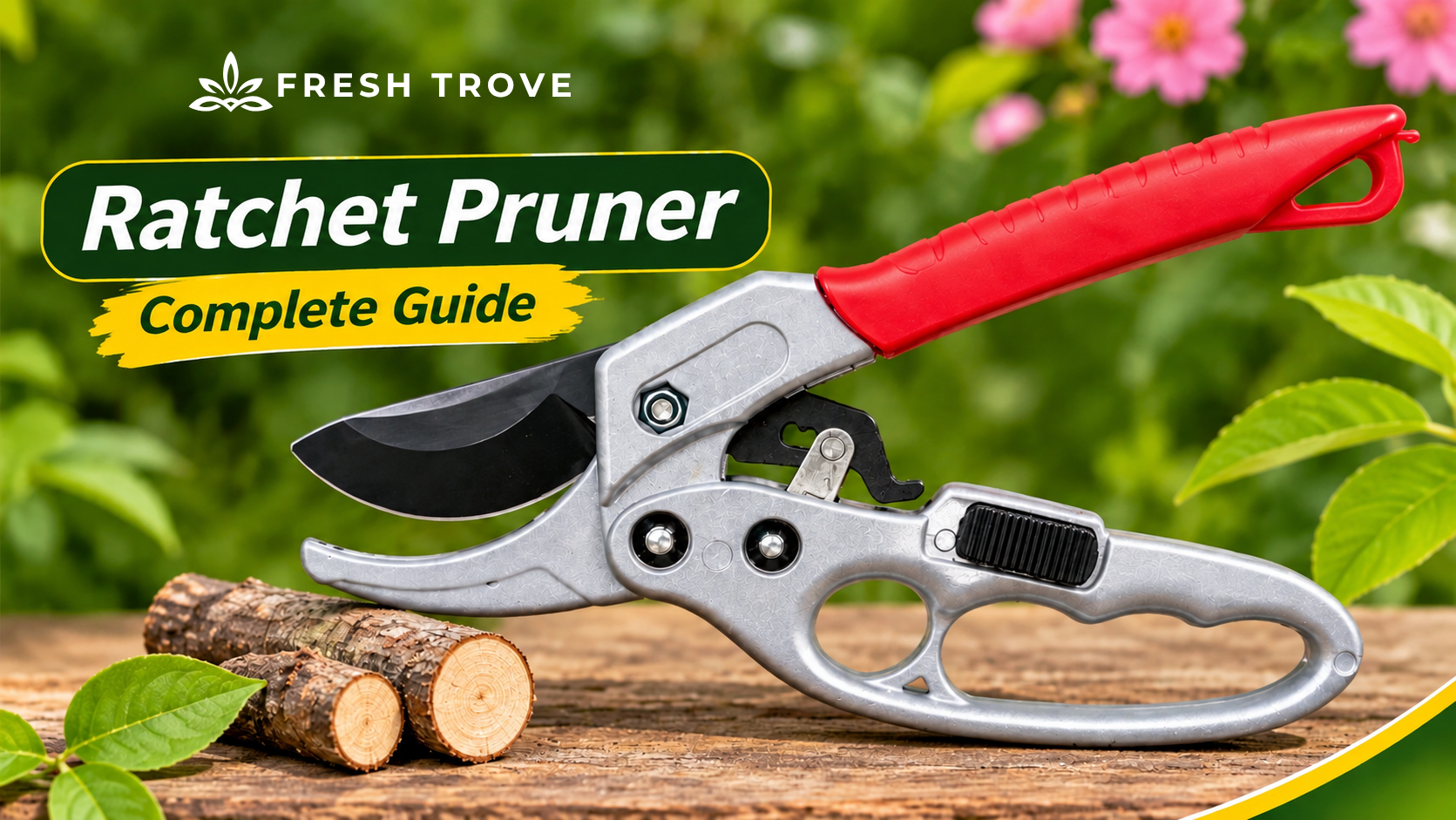
Main parts of a ratchet pruner
Although the design can vary between models, a ratchet pruning shear generally includes the following components: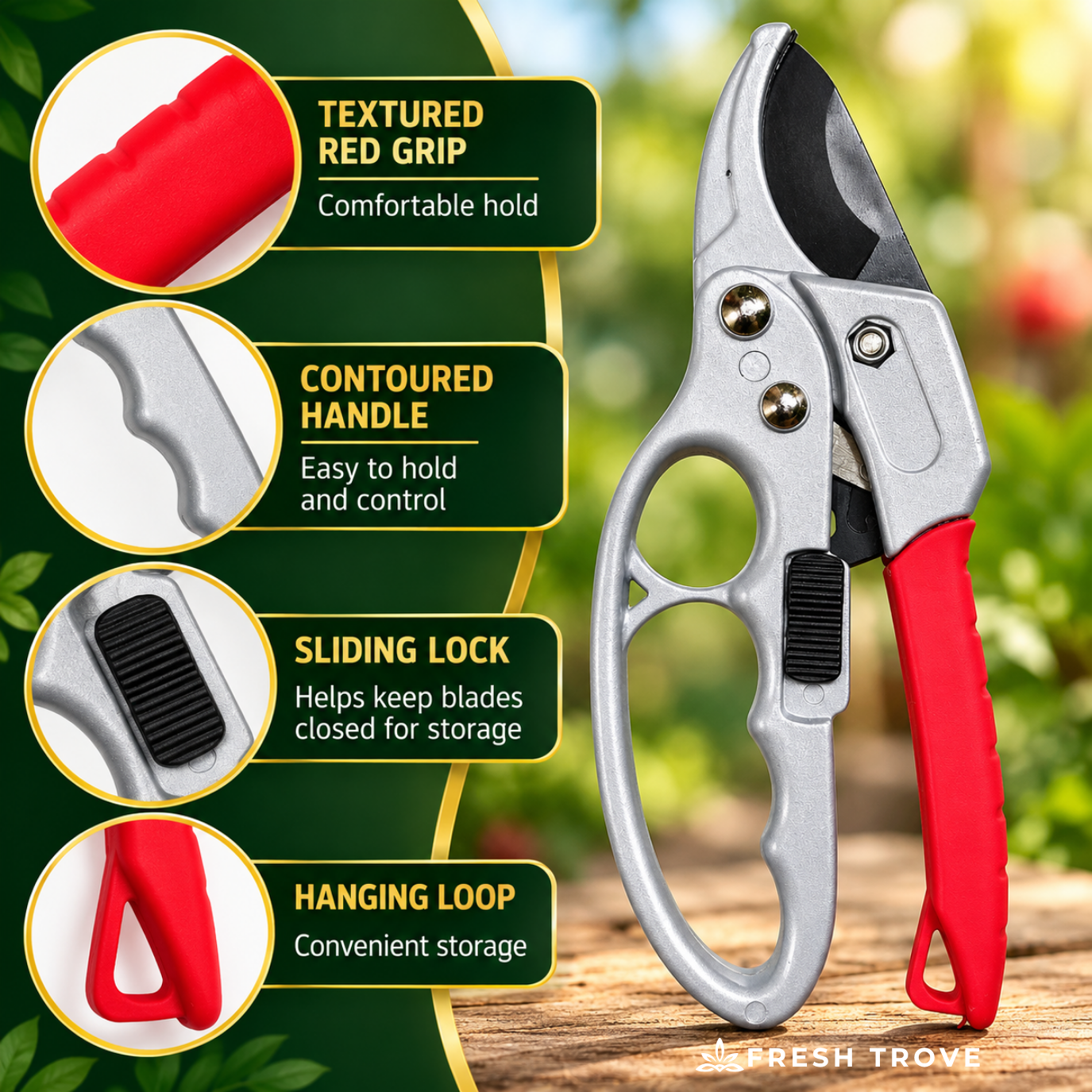
1. Cutting blade
The blade is the main cutting component. Its material, shape, sharpness and construction influence cutting performance.
2. Counter blade or supporting jaw
The opposing part supports the plant material during the cutting process. Its design depends on the type of pruner.
3. Ratchet mechanism
This is the central feature of a ratchet pruner. It allows the cutting action to progress in stages rather than requiring one continuous squeeze.
4. Handle
The handles provide the gripping surface and allow the user to apply pressure. Handle shape and grip material can influence comfort and control.
5. Safety lock
Many pruning shears include a locking feature to keep the tool closed when it is not being used. Always check that the lock is engaged before storage.
6. Spring or return mechanism
Depending on the design, a spring or similar component helps the handles return to their starting position after a squeeze.
2. How Does a Ratchet Pruning Shear Work?
The easiest way to understand a ratchet pruner is to compare its operation with an ordinary pair of pruning shears.
With conventional pruning shears, you generally squeeze the handles and complete the cut in one continuous movement.
A ratchet pruner divides the cutting process into smaller steps.
Step-by-step working process
Step 1: Position the cutting blade
Place the cutting area around the plant stem or branch you intend to prune. Make sure the material is positioned correctly between the cutting components.
Step 2: Hold the handles securely
Grip the handles comfortably. Keep your fingers away from the cutting area and maintain control of the tool.
Step 3: Apply the first squeeze
Squeeze the handles to activate the ratchet mechanism. The cutting blade advances through the plant material.
Step 4: Allow the mechanism to hold its progress
The ratchet mechanism retains the progress made during the first squeeze, depending on the design of the tool.
Step 5: Squeeze again
Continue the cutting action through the next stage. The blade advances further into the stem or branch.
Step 6: Complete the cut
Repeat the process until the material is cut through. Release the handles and return the tool to its starting position according to the manufacturer’s operating instructions.
The number of squeezes required depends on the tool design and the material being cut.
Important: Never force a ratchet pruner beyond its intended cutting capacity. If the branch is too thick, hard, dry or unsuitable for the tool, use an appropriately rated cutting tool instead.
3. What Is a 3-Stage Ratchet Mechanism?
A 3-stage ratchet mechanism is designed to advance the cutting action through three successive stages.
Rather than depending on one continuous squeeze, the user can progress through the cutting process in separate steps.
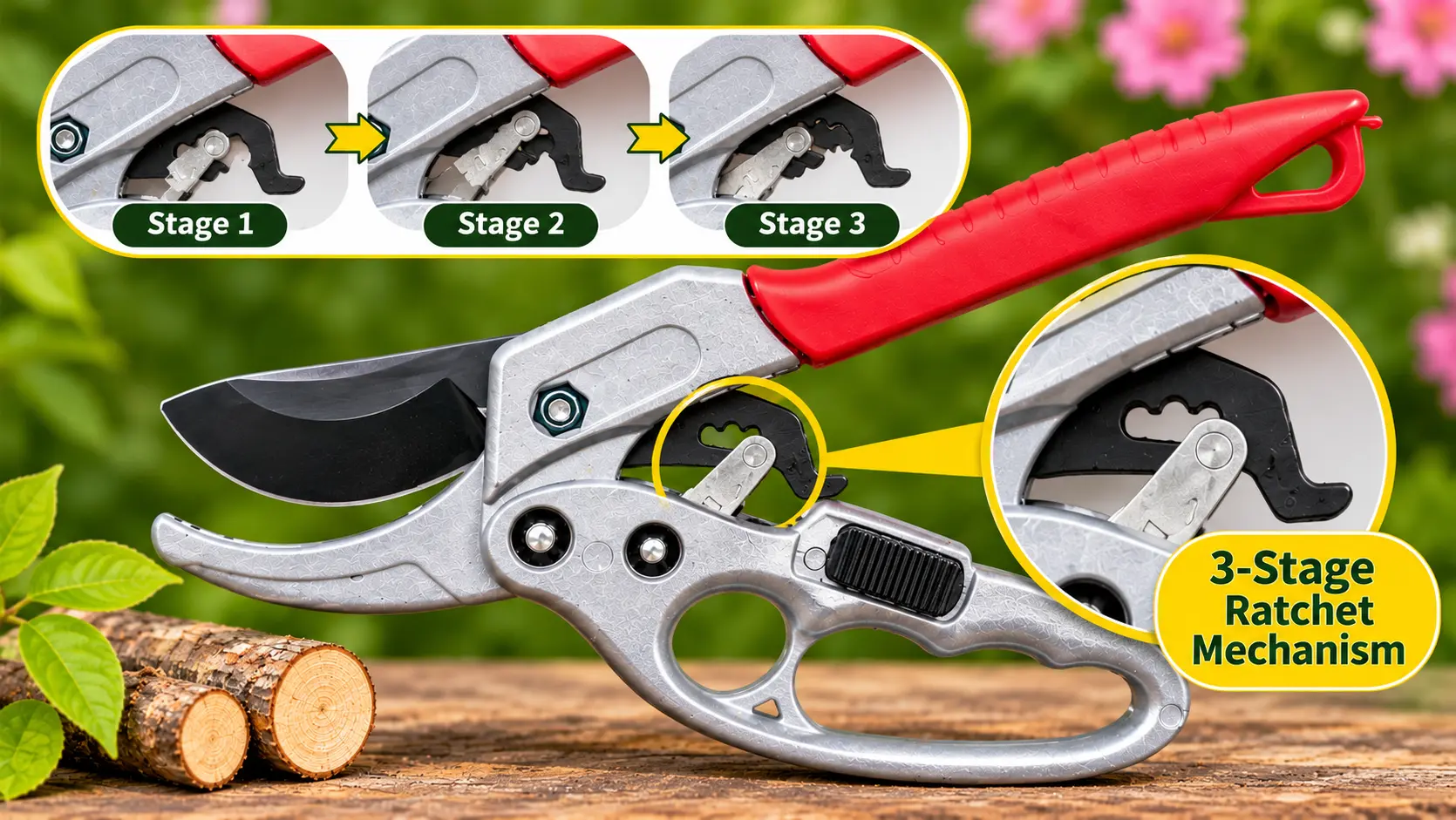
The basic idea is:
- Stage 1: The first squeeze advances the blade into the material.
- Stage 2: The next squeeze advances the cutting action further.
- Stage 3: The final squeeze completes the cut, provided the material is within the tool’s rated capacity.
The exact internal construction and operation may vary between manufacturers. Therefore, the product’s operating instructions should always be followed.
Why does a staged cutting mechanism matter?
A staged mechanism gives the user a different way to apply pressure during pruning. It can be useful when a cut requires more effort than the user wants to apply in one continuous movement.
However, it is important to understand that the ratchet mechanism alone does not determine the cutting performance.
The following factors also matter:
- Blade material and construction.
- Blade sharpness and condition.
- Cutting mechanism quality.
- Handle design and grip.
- Branch thickness and condition.
- Correct positioning of the branch.
A well-designed pruner should have a mechanism that operates smoothly and a blade suitable for its intended gardening tasks.
4. What Are the Benefits of Using a Ratchet Pruner?
Ratchet pruning shears offer several practical features that may make them useful for particular gardening jobs.
4.1 Step-by-step cutting action
The main benefit is the ability to advance the cutting action through successive squeezes.
This gives the user a different approach to pruning compared with conventional shears that rely on one continuous squeezing movement.
4.2 Controlled cutting process
The staged mechanism allows the user to progress through a cut incrementally.
This can be useful when the user prefers to control the cutting process rather than completing the entire cut in one movement.
4.3 Useful for routine garden maintenance
Depending on the model’s cutting capacity, a ratchet pruner can be used for suitable stems and branches on:
- Flowering plants.
- Ornamental shrubs.
- Garden herbs.
- Hedge plants.
- Small garden plants.
- Suitable branches of other plants.
Always check the manufacturer’s cutting-capacity specification before using the tool on a particular branch.
4.4 Dedicated handheld pruning tool
A ratchet pruner is a compact handheld tool for plant maintenance. It can be kept with other essential gardening equipment and used when routine trimming or pruning is required.
4.5 Multiple-stage operation
The mechanism allows the cutting action to progress in stages. This is the defining characteristic that distinguishes a ratchet pruner from a standard direct-action hand pruner.
4.6 Useful for gardeners with different pruning requirements
Different gardeners have different tool preferences. Some prefer conventional bypass pruning shears, while others may prefer the operation of a ratchet-style tool.
Choosing between them depends on the type of plants, the cutting work involved and the user’s comfort with the mechanism.
5. Ratchet Pruner vs Regular Pruning Shears: What Is the Difference?
One of the most common questions buyers ask is whether ratchet pruning shears are better than regular pruning shears.
The answer depends on the gardening task. Both are useful tools, but their operating mechanisms are different.
| Feature | Ratchet pruner | Regular pruning shears |
|---|---|---|
| Cutting action | Progresses through successive stages | Usually completes the cut with one continuous squeeze |
| Mechanism | Uses a ratcheting mechanism | Uses a direct handle-and-blade action |
| Operation | Multiple squeezes may be needed | Generally one squeeze per cut |
| Best suited for | Suitable pruning tasks where staged cutting is preferred | Routine trimming and pruning within the tool’s capacity |
| Cutting performance | Depends on blade, mechanism and material | Depends on blade, design and material |
| User preference | Suits people who prefer incremental operation | Suits people who prefer a direct cutting action |
Which one should you choose?
Choose a ratchet pruner if you prefer a staged cutting mechanism and want to progress through a cut in successive steps.
Choose regular pruning shears if you prefer a straightforward, direct cutting action for routine plant trimming.
Neither type is automatically the best choice for every gardener. The right tool depends on the plants you maintain, the size and condition of the branches, and the way you prefer to work.
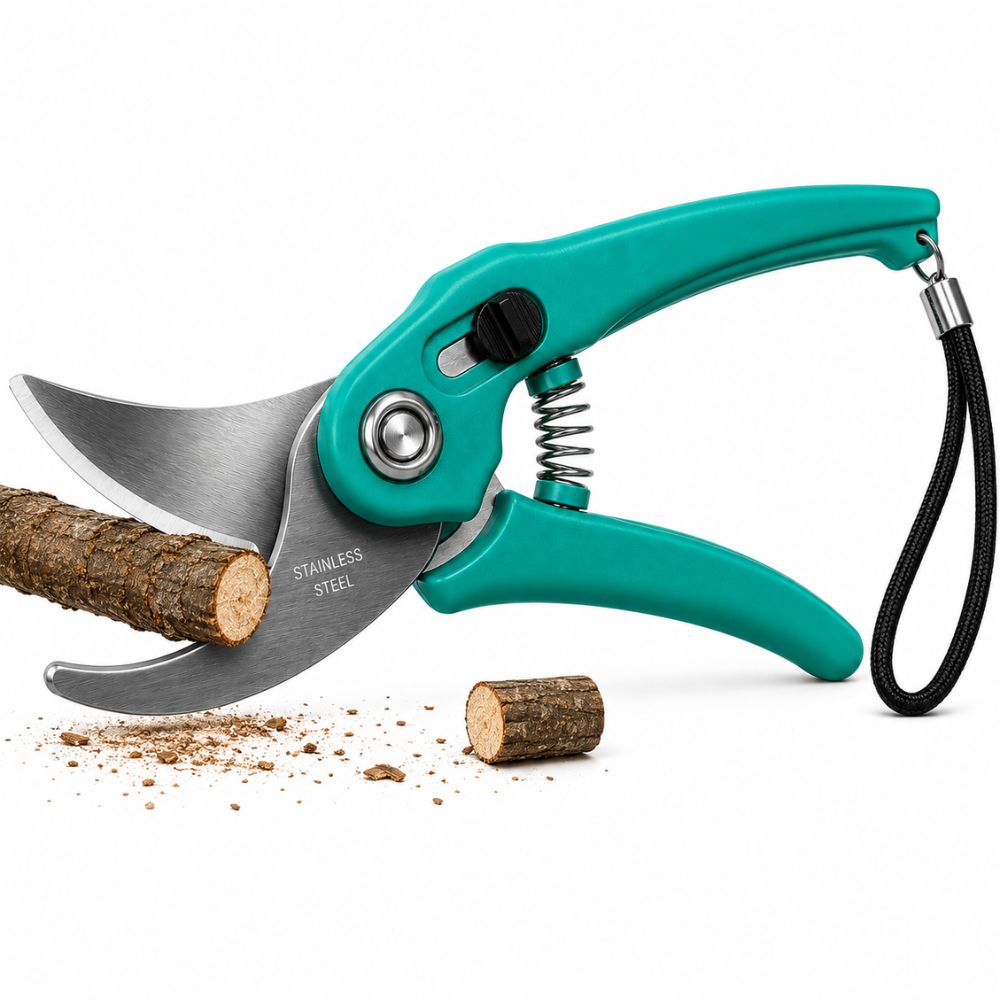
Fresh Trove Garden Pruner Stainless Steel Blade With Safety Lock For Plants
6. Ratchet Pruner vs Bypass Pruner vs Anvil Pruner
These terms describe different aspects of pruning tools, so it is important not to confuse them.
- Ratchet describes the cutting mechanism.
- Bypass describes a blade arrangement in which one blade passes by another.
- Anvil describes a blade arrangement in which the cutting blade closes against a supporting surface.
A ratchet mechanism and a blade arrangement are not necessarily competing descriptions. Some product designs may combine different mechanical or blade features.
Bypass pruners
Bypass pruners use two blades that pass one another during cutting. They are commonly used for routine pruning of live plant growth when a clean cut is important.
Anvil pruners
Anvil pruners use a cutting blade that closes against a flat or shaped supporting surface. Their design differs from bypass shears and should be selected according to the intended material and manufacturer’s recommendations.
Ratchet pruners
Ratchet pruners use a staged cutting mechanism. Their defining feature is how the cutting action advances, rather than simply the shape of the blade arrangement.
Buying tip: Do not choose a pruner based on the word “ratchet” alone. Check the blade design, construction, cutting capacity and operating instructions as well.

7. What Should You Look for When Buying a Ratchet Pruner?
A ratchet pruner should be selected based on its actual construction and intended use, not just its product title.
Here are the important features to consider.
7.1 Blade material
The blade is one of the most important parts of any pruning tool.
Common blade materials include stainless steel and different types of carbon steel.
Stainless steel blades: These are commonly selected for their corrosion-resistance properties. Their actual performance depends on the grade and construction.
High carbon steel blades: These are commonly used in cutting tools because of their potential for hardness and edge performance. They still require appropriate cleaning, drying and maintenance.
When comparing pruners, check the stated blade material rather than assuming that all steel blades have the same properties.
7.2 Blade design
Check the blade arrangement and how the cutting blade interacts with the supporting component.
The design should be suitable for the types of plants and branches you intend to prune.
7.3 Ratchet mechanism
Since the ratchet mechanism is the main feature of this type of pruner, check how it operates.
Look for clear product information about the number of stages, operating method and mechanism design.
7.4 Handle design
The handles should offer a secure and comfortable grip.
Consider:
- Handle shape.
- Grip material.
- Handle size.
- Ease of holding.
- Overall tool balance.
A comfortable handle can make routine gardening more manageable, particularly when the tool is used repeatedly.
7.5 Safety lock
A safety lock helps keep the blades closed when the tool is not being used.
Check that it is easy to engage and disengage while still holding the tool securely.
7.6 Cutting capacity
This is one of the most important specifications to check before buying.
Cutting capacity tells you the maximum branch or stem size the manufacturer states the tool is designed to handle under specified conditions.
Do not assume that every ratchet pruner can cut thick branches. Actual cutting performance can also be affected by wood hardness, moisture, branch condition and blade sharpness.
If the manufacturer does not provide a verified cutting-capacity specification, avoid relying on an assumed measurement.
7.7 Build quality
Examine the blade, handles, joint, ratchet components and locking mechanism.
A well-constructed tool should operate as intended without unnecessary looseness or sticking.
7.8 Ease of maintenance
Pruning tools come into contact with plant sap, moisture, dirt and other garden debris.
Choose a design that can be cleaned and maintained according to its manufacturer’s instructions.
8. How to Use a Ratchet Pruner Correctly
Using the correct cutting technique helps you work safely and avoid unnecessary strain on the tool.
Follow these practical steps.
1. Inspect the tool before use
Check the blade, handles, ratchet mechanism, spring and safety lock. Do not use a tool with loose, damaged or malfunctioning components.
2. Identify the branch you want to prune
Make sure the branch or stem is within the tool’s stated cutting capacity.
3. Position the tool correctly
Place the cutting area around the stem or branch according to the manufacturer’s instructions.
4. Hold the handles securely
Maintain a stable grip. Keep your hands and fingers away from the cutting blade.
5. Operate the ratchet mechanism
Apply pressure through the successive stages. Avoid sudden or excessive force.
6. Complete the cut
Continue until the cut is complete. If the mechanism jams or the branch does not cut normally, stop rather than forcing the tool.
7. Inspect the cut and tool
Check that the cut is complete and that the mechanism returns to its normal position.
8. Clean and store the pruner
Remove plant residue, dry the tool and engage its safety lock before storage.
9. Common Ratchet Pruner Mistakes to Avoid
Even a good gardening tool can perform poorly if it is used incorrectly.
Avoid these common mistakes:
Cutting branches beyond the rated capacity
Trying to cut a branch that is too thick can damage the blade or mechanism. Use a suitable saw or larger cutting tool for branches outside the pruner’s capacity.
Forcing the handles
The ratchet mechanism is designed to advance the cutting action in stages. Excessive force can damage the mechanism or cause loss of control.
Using a dirty blade
Sap and plant residue can accumulate on the blade. Clean it regularly according to the manufacturer’s instructions.
Ignoring the safety lock
Always engage the safety lock when the tool is not in use.
Storing the tool while wet
Moisture and plant residue can contribute to corrosion and deterioration, particularly on components that are not corrosion-resistant.
Using the wrong tool for the job
A handheld pruner is not a replacement for every garden cutting tool. Large branches and unsuitable woody material may require a pruning saw or another appropriately rated tool.
10. How to Clean and Maintain Ratchet Pruning Shears
Regular maintenance helps keep pruning tools in usable condition.
Clean after use
Remove dirt, sap and plant residue from the blade and surrounding components.
Use a suitable cleaning method recommended by the manufacturer.
Dry thoroughly
Wipe the tool dry after cleaning, paying attention to joints and areas where moisture may collect.
Check the blade condition
Inspect the blade for visible damage, looseness, corrosion or dullness.
If sharpening is required, follow the manufacturer’s instructions or use an appropriate sharpening service.
Check the ratchet mechanism
Make sure the mechanism advances and releases correctly.
Do not continue using the pruner if the ratchet mechanism is damaged or does not operate normally.
Lubricate when appropriate
If the manufacturer recommends lubrication, use a suitable product on the specified moving parts. Avoid applying excessive lubricant.
Store safely
Close the tool, engage the safety lock and store it in a dry location away from children.
11. Is a Ratchet Pruner Suitable for Home Gardening?
A ratchet pruner can be a useful addition to a home gardening toolkit, provided its specifications match the work you intend to do.
Home gardeners may need to maintain:
- Flowering plants.
- Decorative shrubs.
- Herbs.
- Hedge plants.
- Small branches.
- Other suitable garden growth.
A ratchet-style pruner may be worth considering if you prefer a cutting action that progresses in stages.
However, a regular bypass pruner may be more suitable for someone who primarily performs quick, routine trimming.
The best approach is to identify the type of plants you maintain and the approximate size of the stems and branches you need to cut before choosing a tool.
12. Introducing Fresh Trove Ratchet Pruning Shears
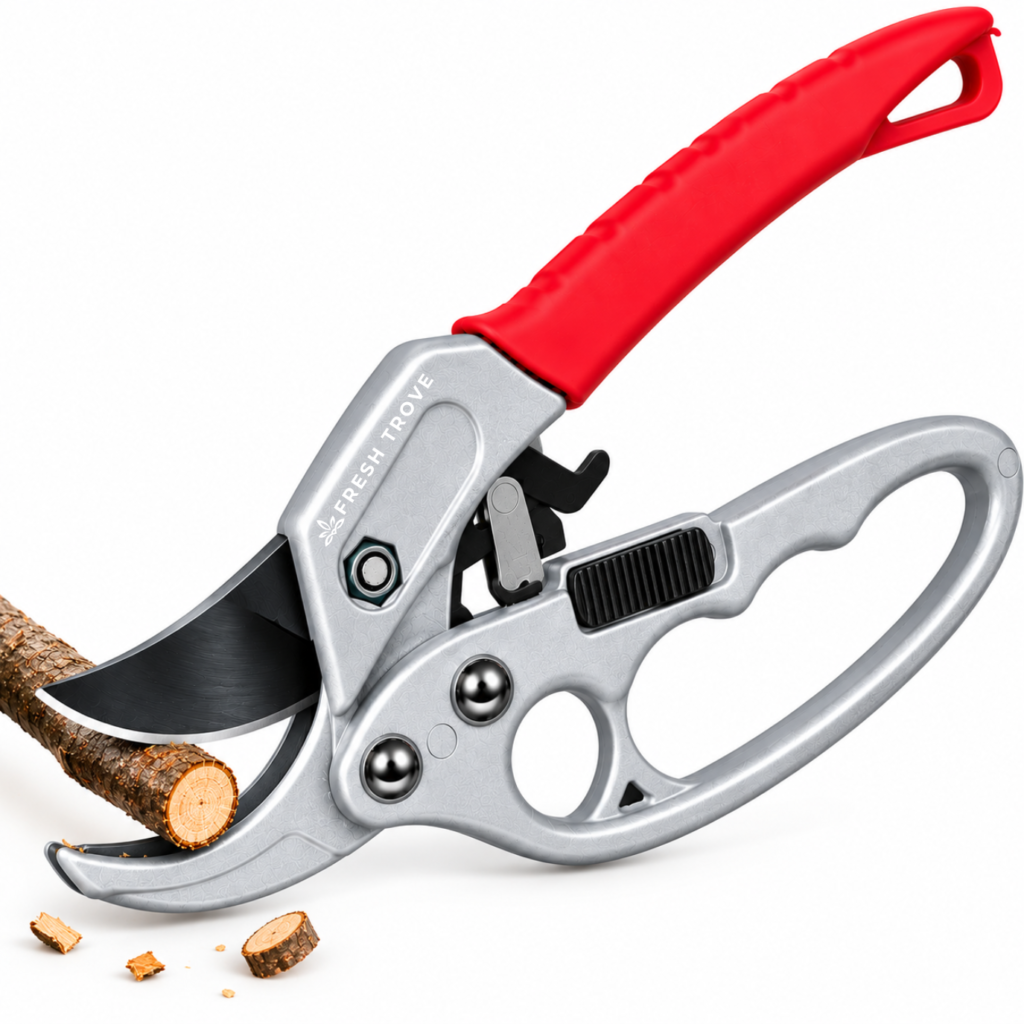
For gardeners looking for a ratchet-style hand pruner, Fresh Trove offers ratchet pruning shears designed around a combination of a high carbon steel blade, a three-stage ratchet mechanism and practical handling features.
The Fresh Trove Ratchet Pruning Shears feature:
- SK-5 high carbon steel blade: A specified blade material for the cutting component.
- 3-stage ratchet mechanism: Designed to advance the cutting action through successive stages.
- Safety lock: Helps keep the tool closed when it is not in use.
- Anti-slip handle: Designed to provide a secure gripping surface.
- Handheld garden tool design: Intended for pruning suitable flowers, herbs, hedge plants, stems and branches within the tool’s cutting capacity.
Who may consider this ratchet pruner?
This tool may be worth considering if you:
- Prefer a ratchet-style cutting mechanism.
- Want a dedicated hand pruner for garden maintenance.
- Maintain flowers, herbs, shrubs and other suitable plants.
- Want a tool with a specified SK-85 high carbon steel blade.
- Prefer a pruner with a safety lock and anti-slip handle.
Before purchasing, check the product specifications and instructions to confirm that the tool is appropriate for the size and type of material you intend to cut.
Explore the Fresh Trove Ratchet Pruning Shears through the Fresh Trove product listing.
At Fresh Trove, our gardening tools are selected with practical gardening needs in mind. Our aim is to help people choose useful tools for everyday plant care and garden maintenance.
KNOW YOUR FOOD. GROW YOUR FOOD.
Frequently Asked Questions About Ratchet Pruners
Q1. What is a ratchet pruner used for?
A ratchet pruner is used to cut suitable plant stems and branches. It uses a ratcheting mechanism that allows the cutting action to advance through successive stages.
Q2. How does a ratchet pruning shear work?
A ratchet pruning shear works by allowing the blade to advance incrementally. The user squeezes the handles, the mechanism retains the progress, and further squeezes advance the cut until the material is cut through.
Q3. What is a 3-stage ratchet pruner?
A 3-stage ratchet pruner is designed to progress through three successive stages of cutting action. The exact mechanism varies by product, so users should follow the manufacturer’s operating instructions.
Q4. Is a ratchet pruner better than regular pruning shears?
Not necessarily. A ratchet pruner uses a staged cutting action, while regular pruning shears generally use a direct squeezing action. The better option depends on your gardening tasks, tool preference and the material you need to cut.
Q5. Can a ratchet pruner cut thick branches?
Only within the cutting capacity specified by the manufacturer. A ratchet mechanism does not automatically make a pruner suitable for every thick branch. For larger branches, use an appropriately rated pruning saw or branch cutter.
Q6. What is the difference between a ratchet pruner and a bypass pruner?
Ratchet describes the cutting mechanism, while bypass describes a blade arrangement in which one blade passes another. The terms refer to different aspects of a pruning tool.
Q7. Are ratchet pruning shears suitable for flowers?
They can be used for suitable flower stems if the tool’s blade and cutting mechanism are appropriate for the stem size. For delicate flowers, choose a tool that makes a suitable clean cut without crushing the stem.
Q8. Can I use a ratchet pruner for herbs?
A ratchet pruner may be used for suitable herb stems, but smaller, delicate herbs may be easier to harvest with a smaller pair of garden scissors or snips.
Q9. What blade material should I choose in a ratchet pruner?
Compare the stated blade material and construction. Stainless steel and high carbon steel are both used in cutting tools, but their properties and maintenance requirements differ. Consider the product’s specifications and intended use.
Q10. What does SK-85 high carbon steel mean?
SK-85 is a steel designation used for certain high-carbon steel products. When a pruning shear lists an SK-85 blade, it identifies the specified steel material. Actual blade performance also depends on heat treatment, blade geometry, manufacturing and maintenance.
Q11. Does a ratchet pruner need maintenance?
Yes. Clean away plant residue, dry the tool, inspect the blade and mechanism, and lubricate moving parts if recommended by the manufacturer. Store it with the safety lock engaged.
Q12. Why does my ratchet pruner stop before completing a cut?
Possible reasons include an oversized branch, incorrect positioning, a dirty or damaged blade, or a malfunctioning mechanism. Stop using excessive force. Check the tool and follow the manufacturer’s instructions.
Q13. Is a ratchet pruner suitable for beginners?
It can be suitable for beginners who understand how to operate the ratchet mechanism and follow basic pruning safety. Read the product instructions before first use and practise on suitable plant material.
Q14. How do I store pruning shears safely?
Clean and dry the tool, close the blades, engage the safety lock and store it in a dry place where children cannot reach it.
Q15. What should I check before buying a ratchet pruner?
Check the blade material, cutting capacity, ratchet mechanism, handle design, safety lock, construction quality and maintenance instructions. Choose according to your actual gardening requirements.
Final Thoughts: Choosing the Right Ratchet Pruner for Your Garden
A ratchet pruner is a specialised gardening tool that offers a step-by-step cutting mechanism. It can be a practical option for gardeners who prefer to advance the cutting action through successive squeezes rather than using one continuous hand movement.
However, choosing the right pruner requires more than looking at the ratchet mechanism. Blade material, cutting capacity, handle design, safety features and overall construction all matter.
Before buying, consider the plants you maintain, the thickness and condition of the branches you cut, and the type of pruning action you find comfortable.
If a staged cutting mechanism suits your gardening requirements, a ratchet pruner may be a useful addition to your collection of gardening tools.
At Fresh Trove, we believe gardening starts with understanding what you grow and choosing the right tools to care for it.
Fresh Trove – Practical Gardening Tools for Everyday Growing.
KNOW YOUR FOOD. GROW YOUR FOOD.